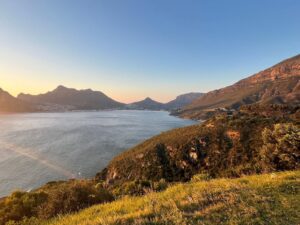
Few road trips capture Cape Town’s dramatic coastal landscape quite like Chapman’s Peak Drive. With the Atlantic Ocean stretching out below and steep mountain slopes rising alongside the road, the route has become one of the Cape Peninsula’s best-known scenic drives.
Known locally as “Chappies,” Chapman’s Peak Drive connects Hout Bay and Noordhoek, making it both an attraction in its own right and a useful part of a wider Cape Peninsula road trip. The route includes numerous places to stop and take in the coastline, while Hout Bay and Noordhoek provide plenty of reasons to extend the journey.
Whether you are planning a scenic afternoon drive, looking for Cape Town photography spots or building a full Peninsula itinerary, here is what to know before driving Chapman’s Peak.
Where Is Chapman’s Peak Drive?
Chapman’s Peak Drive runs along the Atlantic coastline between Hout Bay and Noordhoek on the Cape Peninsula.
This makes it easy to incorporate into a longer coastal journey.
From the Cape Town side, travellers can follow the Atlantic Seaboard through areas such as Camps Bay and Llandudno before reaching Hout Bay and continuing onto Chapman’s Peak.
From the other direction, the route begins near Noordhoek, from where travellers can continue further around the Cape Peninsula.
A typical extended route could therefore look like:
Cape Town City Centre → Camps Bay → Llandudno → Hout Bay → Chapman’s Peak Drive → Noordhoek → Cape Peninsula
Rather than rushing through, allow additional time for viewpoints, photographs and stops in Hout Bay or Noordhoek.
Why Is Chapman’s Peak Drive Famous?
The attraction is the combination of mountain, cliffs, ocean and winding coastal road.
Cape Town Tourism describes Chapman’s Peak as one of Cape Town’s standout coastal drives, with numerous lookout points where visitors can stop to enjoy the scenery.
The road is also an impressive piece of Cape engineering. Cape Town Tourism’s coastal map notes that construction took seven years and that the road was completed in 1922.
Today, the drive is also closely associated with cycling and running and forms an iconic section of the Cape Town Cycle Tour.
For visitors, however, its biggest appeal remains simple: it provides one of the most memorable ways to experience Cape Town’s Atlantic coastline by road.
Best Stops Along Chapman’s Peak Drive
One of the mistakes visitors can make is treating Chapman’s Peak purely as a route between two destinations.
The better experience is to make the journey itself part of the day.
1. Hout Bay
If you are approaching from Cape Town, Hout Bay makes a natural first stop.
The seaside neighbourhood combines a working harbour with restaurants, marine activities, beaches and mountain scenery. Cape Town Tourism highlights seafood, boat trips, family attractions and accommodation among the area’s visitor experiences.
You can spend time around the harbour, have something to eat or simply enjoy the view before continuing towards Chapman’s Peak.
Hout Bay also provides excellent views back towards the mountains surrounding the bay.
2. Chapman’s Peak Lookout Points
Once you enter Chapman’s Peak Drive, the road provides multiple opportunities to stop and appreciate the coastline.
Rather than choosing only one viewpoint, allow time to use the designated stopping areas that are open during your visit.
Views change considerably as you travel around the mountain. Depending on where you stop, you can look across the Atlantic, back towards Hout Bay or towards the beaches and mountains around Noordhoek.
These stops are particularly worthwhile for photography.
Important: only stop in designated safe stopping areas and observe current road signs and restrictions.
3. Ocean Viewpoints
The elevated sections of the route provide some of the most dramatic perspectives.
The combination of the road, exposed mountainside and Atlantic Ocean creates the landscape for which Chapman’s Peak is famous.
On a clear day, visibility can extend far along the coastline, while changing weather can create a completely different atmosphere.
If photography is part of your trip, give yourself more time than the basic driving time suggests.
4. Picnic and Rest Stops
Chapman’s Peak is also a place to slow the journey down.
Where designated areas are open and stopping is permitted, a short break gives you more opportunity to enjoy the surroundings than simply viewing them through the car window.
Bring water, something to eat and a camera, and make the scenic drive part of the day’s experience rather than just transportation between Hout Bay and Noordhoek.
Always use designated visitor areas and take any litter away with you.
5. Noordhoek
At the southern end of the drive, Noordhoek is worth exploring rather than immediately continuing onward.
Cape Town Tourism describes Noordhoek as a laid-back coastal neighbourhood with restaurants, bars, wineries, galleries and horse-riding experiences.
The area is particularly well known for its long beach and relaxed village atmosphere.
This makes Noordhoek an excellent lunch or afternoon stop before either returning towards Cape Town or continuing around the Peninsula.
6. Noordhoek Beach
If you have time, add Noordhoek Beach to the trip.
Cape Town Tourism’s coastal guide describes the beach as popular for surfing, kite flying, beach walks and dog walking. The same guide warns that swimming is not encouraged because of strong rip currents.
The beach provides a completely different perspective from the elevated road above it and makes a natural extension to a Chapman’s Peak road trip.
Best Views on Chapman’s Peak Drive
There is no single view that defines Chapman’s Peak.
Part of the attraction is watching the landscape change throughout the journey.
Hout Bay Views
When travelling from Hout Bay towards Noordhoek, several perspectives look back towards the bay, harbour and surrounding mountains.
This is one of the classic Chapman’s Peak scenes.
Atlantic Ocean Views
Other sections open directly onto the Atlantic.
These viewpoints emphasise the scale of the coastline and the contrast between the mountain and ocean.
Noordhoek Views
As the route approaches Noordhoek, the scenery changes again, with views towards the long coastline and surrounding mountains.
This is one reason we recommend travelling the route slowly rather than treating Chapman’s Peak simply as a shortcut.
Is Chapman’s Peak Good for Sunset?
Chapman’s Peak is well known as a sunset destination.
Cape Town Tourism specifically includes it among its recommended sunset locations and notes the numerous lookout areas along the route.
However, sunset visits require additional planning.
Road conditions, weather, operating restrictions and seasonal sunset times can all affect your journey.
Check the road’s current status before leaving and allow enough time to complete your trip safely.
Chapman’s Peak Toll Fees
Chapman’s Peak Drive is a toll road, and motorists should expect to pay a fee to travel through the route.
Toll tariffs can change, so it is better to check the official Chapman’s Peak Drive information before travelling rather than relying on an older price quoted in a travel article.
This is particularly important if you are planning a Cape Peninsula itinerary in advance.
Check Whether Chapman’s Peak Is Open
This is one of the most important parts of planning your visit.
Chapman’s Peak can be affected by adverse weather and road conditions. Cape Town Tourism advises visitors to check whether the road is open before travelling.
Do this on the day of your trip rather than assuming the route will be accessible because it was open previously.
If Chapman’s Peak forms part of a larger Peninsula itinerary, it is also useful to have an alternative route in mind.
Best Time to Drive Chapman’s Peak
There isn’t one perfect time for every visitor.
Morning
A morning drive can work well if Chapman’s Peak forms the beginning of a full-day Cape Peninsula trip.
Starting earlier also gives you more time for stops further south.
Afternoon
An afternoon trip works well when combining Hout Bay, Chapman’s Peak and Noordhoek.
You can stop for lunch before or after the drive and spend more time exploring the surrounding coastal areas.
Sunset
Sunset provides a particularly scenic experience, but visitors should allow extra time and check current operating conditions.
Clear Days
Clear weather naturally provides the broadest coastal views.
Cape weather can change quickly, however, and cloud and mist are part of the character of the Peninsula. If visibility is poor, check conditions before committing to the drive.
How Long Does Chapman’s Peak Drive Take?
The actual drive is relatively short. Cape Town Tourism describes it as roughly a half-hour drive, but that does not include time spent at viewpoints or exploring Hout Bay and Noordhoek.
For sightseeing, allow considerably longer.
A relaxed visit could easily include:
Hout Bay
→ Chapman’s Peak viewpoints
→ Noordhoek
→ Noordhoek Beach
→ Lunch or coffee
If you are incorporating the road into a larger Cape Peninsula trip, Chapman’s Peak becomes one section of a full-day journey.
Chapman’s Peak as Part of a Cape Peninsula Road Trip
Chapman’s Peak works particularly well as part of a broader Peninsula itinerary.
A possible full-day route is:
Cape Town
→ Camps Bay
→ Llandudno
→ Hout Bay
→ Chapman’s Peak Drive
→ Noordhoek
→ Cape Peninsula
From there, travellers can continue towards other attractions around the southern Peninsula.
This creates a road trip combining beaches, mountain landscapes, coastal villages, scenic drives and some of Cape Town’s best-known natural attractions.
Can You Cycle Chapman’s Peak?
Yes. Chapman’s Peak is well known among Cape Town’s cycling community and forms part of the route used by the Cape Town Cycle Tour.
Drivers should therefore remain aware that cyclists and runners may also be using the road.
Give other road users appropriate space and drive according to current road conditions and signage.
Photography Tips for Chapman’s Peak
Chapman’s Peak is one of Cape Town’s obvious photography locations, but a few simple choices can improve the experience.
Use the official stopping areas rather than attempting to stop alongside unsafe sections of road.
Try capturing both the broad coastal landscape and smaller details such as the curves of the road, mountain rock formations and changing ocean conditions.
If you are visiting near sunset, arrive early enough to find a suitable designated viewpoint without rushing.
Most importantly, don’t allow a photograph to become a safety risk. The road remains an active route and conditions can change.
What to Take With You
For a relaxed Chapman’s Peak outing, consider bringing:
- Water
- Sun protection
- A light jacket
- Camera or phone
- Comfortable walking shoes if combining the drive with short walks
- Snacks or picnic food
- Payment method for the toll
Cape Town’s coastal weather can change during the day, so an additional layer is useful even when conditions appear warm when you leave.
Hout Bay or Noordhoek: Where Should You Stop?
Ideally, experience both.
Hout Bay is the better choice if you want a harbour atmosphere, seafood, marine activities and a busier coastal destination.
Noordhoek offers a more relaxed village and beach atmosphere, with restaurants, galleries, horse riding and other activities in the area.
Together they turn Chapman’s Peak from a short scenic drive into a much fuller Cape Town day trip.
Is Chapman’s Peak Drive Worth Visiting?
For visitors exploring Cape Town by road, Chapman’s Peak offers a distinctive combination of scenery, accessibility and connection to other Cape Peninsula attractions.
It isn’t simply about reaching Noordhoek from Hout Bay.
The appeal lies in the journey itself: stopping at viewpoints, looking across the Atlantic, exploring the neighbouring coastal communities and experiencing the dramatic meeting point between Cape Town’s mountains and ocean.
Whether you include it in a full Cape Peninsula road trip or visit specifically for the views, Chapman’s Peak deserves time rather than a rushed drive-through.
Plan Your Chapman’s Peak Drive
Before leaving, check the current road status, toll information and weather conditions.
Then give yourself enough time to explore beyond the road itself.
Start in Hout Bay, enjoy the viewpoints along Chapman’s Peak, continue into Noordhoek and use the trip as a gateway to more of the Cape Peninsula.
For more ideas, continue exploring Cape Town Explore’s guides to Cape Town’s beaches, coastal walks, attractions, day trips and Cape Peninsula experiences.
Frequently Asked Questions
Where does Chapman’s Peak Drive start and end?
Chapman’s Peak Drive runs between Hout Bay and Noordhoek on Cape Town’s Atlantic coastline.
Do you have to pay to drive Chapman’s Peak?
Yes. Chapman’s Peak Drive is a toll route for motorists. Check the official route information for current tariffs before travelling.
How long does Chapman’s Peak Drive take?
Cape Town Tourism describes the drive itself as approximately half an hour, but visitors should allow considerably more time if stopping at viewpoints or visiting Hout Bay and Noordhoek.
Can Chapman’s Peak Drive close?
Yes. The route can close because of adverse weather or road conditions. Visitors should check its current status before travelling.
Is Chapman’s Peak good for sunset?
Yes. The route is promoted as one of Cape Town’s notable sunset locations, with multiple lookout areas along the drive.
What can you combine with Chapman’s Peak Drive?
Hout Bay, Noordhoek, Noordhoek Beach and a wider Cape Peninsula road trip all combine naturally with the drive.